Supply chain
Local clothing manufacturers: how to find one and how to vet it
Six kinds of company call themselves a clothing manufacturer and they do different jobs. How to tell them apart, where to actually look, and the warning signs worth walking away from.
 LukeSupply chain5 min read
Searching for a clothing manufacturer near you returns a list of companies that do six genuinely different jobs, all using the same words to describe themselves. That is the actual problem with the search, and it is why so many first conversations end with a founder confused about why a quote arrived for something they did not ask for.
Before location, before price, work out which kind of company you need.
The six things that call themselves a manufacturer
Key points
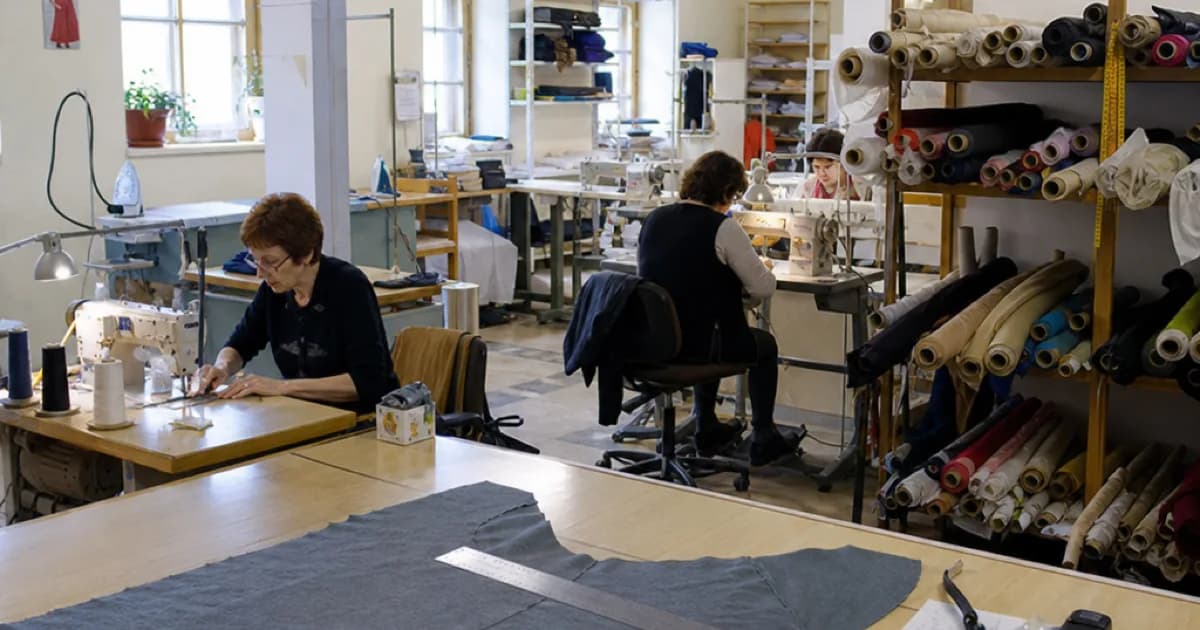
- Cut and sew. Turns your pattern into garments. Assumes you arrive with a tech pack and often with your own fabric
- Full package (FPP). Sources materials, develops the pattern, samples, produces, finishes and packs. The most hands-off, the most expensive per unit, usually the highest minimum
- Sample room. Makes first samples and prototypes. Does not run production. Frequently the right first call
- Private label. Sells you their existing blocks with your label and colours. Fast and cheap; you are not designing anything
- Print and embroidery. Decorates blanks somebody else made. Not a manufacturer, whatever the website says
- Fabric and trim suppliers. Sell you materials. No sewing
A founder with a finished tech pack and a chosen mill wants cut and sew. A founder with a sketch wants a sample room first, then cut and sew. A founder who wants a hoodie with their logo on it wants private label or a print shop, and paying for full-package development would be burning money on a problem they do not have.
Where to look
Search is the obvious channel and the weakest one, because the companies that rank are the ones that invested in ranking, which is uncorrelated with whether they are good at your category. Use it to build a list, not to pick.
The channels that work better all share a property: somebody has already filtered.
- Adjacent trades. Pattern makers, screen printers, embroiderers and fabric shops all work alongside factories daily and know which ones return calls. A pattern maker’s recommendation is worth ten search results.
- Fashion schools and incubators. Sample rooms and small production shops cluster around design programmes. The staff know who takes small runs.
- Trade directories. Useful specifically because listings state services and minimums, which is exactly what search results hide.
- Other founders. Most will not name their factory. Almost all will tell you who to avoid, which is the more valuable half.
Whatever the channel, verify one thing before the first call: do they actually manufacture, or do they resell blanks? A surprising share of “manufacturers” in local search results are decorators with a good SEO agency.
What to ask on the first call
The questions are less about extracting information than about watching how someone handles being asked.
- Which categories do you run week to week?
- Do you do patternmaking and grading, or cut and sew only?
- What is your minimum, and does it move with fabric or colour?
- Do you source materials or do I supply them?
- What happens between the approved sample and the bulk run?
- What gets checked before goods are packed?
- What do you need from me to quote accurately?
That last one is the tell. A factory that answers “send me a tech pack, a fabric, a size run and a quantity” is a factory that has done this before. A factory that quotes off a photo is telling you the number is invented.
How a manufacturer handles the first conversation is a preview of how they will handle the first problem.
Warning signs
None of these are automatically disqualifying. All of them mean slow down and ask for more.
- Quotes a price before knowing the fabric, construction or quantity
- Will not put minimums, timelines or payment terms in writing
- Cannot describe its own production process step by step
- Has no examples in your category
- Pushes you toward bulk without sampling
- Answers inconsistently, or only by phone
The last one matters more than it looks. Apparel production runs on approved details, and a partner who avoids writing things down is a partner you cannot hold to anything when a run comes back wrong.
Local is a means, not the goal
Proximity is worth paying for when it shortens the loop: same-day sample pickup, a factory visit before bulk, a fit problem solved in an afternoon. It is worth less when your product needs a fabric nobody near you carries, or a machine nobody near you runs.
So treat “near me” as one input rather than the filter. The brands that get this right often end up with a local sample room and a production partner somewhere else, because those two jobs reward different things. The domestic-versus-overseas trade-off is worth reading before you commit either way, and if the wall you keep hitting is minimums rather than distance, that has its own answer.
Frequently asked
Cut and sew turns your pattern into garments and generally expects you to bring the tech pack and often the fabric. Full package handles sourcing, development, sampling, production and finishing. Full package costs more per unit and usually carries a higher minimum; it buys you a much shorter to-do list.
Your own merch, in production in 5 minutes.
Adaptive storefronts on top, the whole supply chain underneath. Ship without managing the stack.